

The origin of "coffee".
Coffee originated in Ethiopia, with a legend recounting its discovery by a goatherd named Kaldi, who noticed his goats becoming more energetic after eating berries from a certain tree. This story spread, eventually leading to the development of coffee consumption. Coffee spread from Ethiopia to Yemen, where it was first commercially cultivated and traded. From there, it spread to other parts of the world, including Europe and Asia.
Main Coffee Varieties You Should Know
There are four main coffee varieties you should be familiar with: Arabica, Robusta, Liberica, and Excelsa. Each variety has distinct characteristics and flavor profiles, as outlined below.
1. Arabica Coffee (Coffee Arabica)
Origin and Growing Areas:
Arabica originates from Africa, particularly Ethiopia. It is the most popular coffee variety in the world, accounting for more than 60% of global coffee production.
Physical Characteristics:
The plant is small to medium in size. Leaves are oval-shaped, flowers are fragrant, and the cherries are oval. The beans are oval with a distinctive “S”-shaped crease in the center.
Flavor and Aroma:
Arabica has a smooth, mild aroma with a balanced flavor. It is slightly bitter with gentle sweetness and often features notes of fruit or chocolate.
Key Note:
Requires cool and humid climate conditions for cultivation.
2. Robusta Coffee (Coffee Robusta)
Origin and Growing Areas:
Robusta originates from Central and West Africa and is the second most widely cultivated coffee variety after Arabica.
Physical Characteristics:
The plant is small to medium in size and is more resilient to harsh weather and plant diseases than Arabica. The beans are rounder, with a straight center crease.
Flavor and Aroma:
Robusta has a strong, intense bitterness and contains 2–3 times more caffeine than Arabica.
Key Note:
Commonly used for iced coffee and instant coffee due to its bold and robust flavor.
3. Liberica Coffee (Coffee Liberica)
Origin and Growing Areas:
Liberica originates from West Africa and is commonly grown in Malaysia and the Philippines.
Physical Characteristics:
Often referred to as “large-leaf coffee” because its leaves are significantly larger than those of other varieties.
Flavor and Aroma:
Its flavor is somewhat similar to Arabica but with a more pronounced sweet-and-sour berry-like acidity.
Key Note:
Not widely popular in commercial markets compared to Arabica and Robusta, but it is often blended with other coffees to add depth and intensity.
4. Excelsa Coffee (Coffee Excelsa)
Origin and Growing Areas:
Excelsa originates from Central Africa.
Physical Characteristics:
The tree is tall and highly resistant to drought and plant diseases.
Flavor and Aroma:
It has a strong, somewhat harsh bitterness, though it can sometimes present a surprisingly smooth mouthfeel.
Key Note:
This variety is not very common in the market, but it is occasionally used in blends to add complexity and flavor dimension.
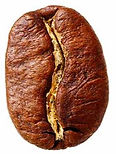

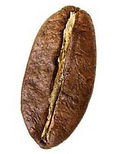
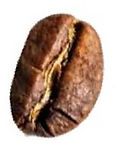
กาแฟอาราบิก้า
(Coffee Arabica)
กาแฟโรบัสต้า
(Coffee Robusta)
กาแฟลิเบอริก้า
(Coffee Liberica)
กาแฟเอ็กเซลซ่า
(Coffee Excelsa)
Coffee bean processing
Coffee bean processing is a crucial process that greatly affects the flavor and quality of coffee. Generally, there are three main methods:
1. Dry Process (or Natural Process)
Method: This is the oldest and most traditional method, starting with drying the harvested coffee cherries whole in the sun on a drying yard or bamboo rack until the coffee cherries are dry and the skin begins to turn reddish-brown. This takes approximately 2-4 weeks, depending on the weather.
Result: The coffee beans absorb the sweetness and aroma from the dry pulp surrounding them, resulting in a sweet, juicy, fruity flavor with a fuller body and greater flavor complexity than other methods.
Advantages/Disadvantages: This method is water-efficient and requires minimal equipment, but quality control is more difficult, and it requires a clean, well-ventilated drying area.
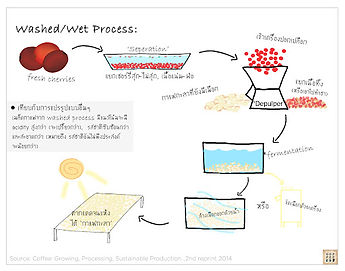
2. Wet Process (or Washed Process)
Method: This is the most popular and best method for quality control. It begins with washing and sorting out imperfect fruits. They are then passed through a pulping machine to remove the skin and pulp, leaving only the seeds coated with mucilage. The seeds are then fermented in tanks to remove all the mucilage, and finally sun-dried.
Result: The resulting coffee will have a clean, refreshing flavor, a distinct acidity, and fruity or floral aromas.
Advantages/Disadvantages: Provides a clean and consistent flavor, but uses a large amount of water and has high equipment investment costs.
3. Semi-Washed Process (or Honey Process)
Method: This method is a middle ground between the dry and wet methods. It begins with washing the coffee cherries and removing the outer shell, but instead of fermenting them in water to completely remove the mucilage, the beans with the mucilage still attached are sun-dried. This allows the sweetness from the mucilage to permeate the coffee beans.
Result: The resulting coffee will have a sweet, honey-like flavor, a heavier body than the wet-brewed method, but still retain a refreshing fruity character.
Advantages/Disadvantages: This method offers better quality control than the dry method and uses less water than the wet method. The amount of mucilage remaining affects the flavor of the coffee, resulting in variations such as Yellow Honey, Red Honey, and Black Honey, depending on the amount of remaining mucilage.
.jpg)
.jpg)
.jpg)

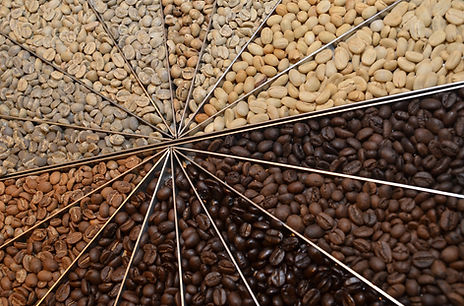
Coffee roasting level
Coffee roasting levels refer to the classification of coffee beans based on the roasting time and temperature, which directly affect the color, aroma, and flavor of the coffee. There are four main roasting levels:
1. Light Roast
Appearance: Coffee beans are light brown, similar in color to cinnamon, and have no oily coating.
Taste and Aroma: The taste is distinctly fruity and acidic with a high degree of natural sweetness. There are floral or fruity aromas, and the body is light.
Note: This roast level has the highest caffeine content, making it ideal for drip coffee or brewing methods that emphasize complex flavors.
2. Medium Roast
Appearance: The coffee beans are slightly darker brown and do not yet have an oily coating.
Taste and Aroma: This level offers the most balanced flavor profile. The acidity is reduced but still present, with a sweetness reminiscent of caramel or chocolate, and a fuller body.
Note: This is the most popular level and is suitable for various brewing methods, including drip coffee, espresso, or coffee with milk.
3. Medium-Dark Roast
Appearance: Coffee beans are dark brown in color with a slight oily coating.
Taste and Aroma: The flavor is intense, with a more pronounced bitterness than acidity. There are aromas of chocolate and caramel, and it has a full body.
Note: This is ideal for making coffee with milk, as the coffee flavor will be strong enough not to be masked by the milk.
4. Dark Roast
Appearance: Coffee beans are dark brown, almost black, with a clearly visible oily coating.
Taste and aroma: Very bitter taste, smoky or burnt aroma, almost no acidity, very heavy body.
Note: This roast level has the lowest caffeine content compared to other levels. It is popularly used in Thai coffee menus, such as traditional Thai coffee or iced coffee with condensed milk.